David Snowden: The KissFAQ Interview
By Tim McPhate
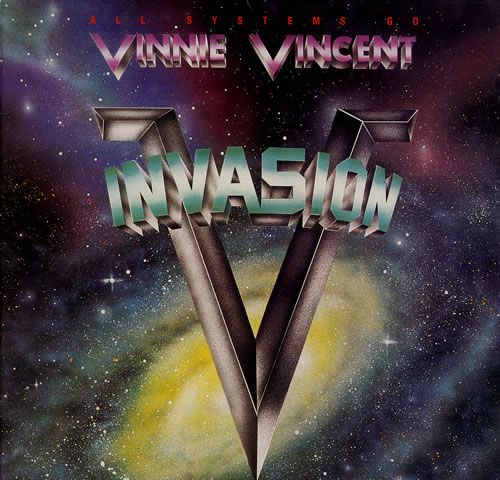
When Vinnie Vincent Invasion's sophomore album, "All Systems Go," was released on May 2, 1988, hopes were sky high.
With the Led Zeppelin-inspired "Ashes To Ashes," the crushing "Breakout," the moody "That Time Of Year," and four-on-the-floor stompers such as "Burn," Vincent had arguably uncorked his best and most diverse slate of songs to date. The Invasion -- Vinnie Vincent, Mark Slaughter, Dana Strum, and Bobby Rock -- were ready to take no musical prisoners and the timing seemed perfect, too. In 1988 rock bands such as Def Leppard, Bon Jovi, Poison, Guns N' Roses, Van Halen, and Cinderella all inhabited the upper echelon of the Billboard 200.
Unfortunately, within the span of only three months, internal strife and various personal- and business-related issues caused the Invasion to disintegrate. And despite the release of two singles, including "Love Kills," which was featured in "Nightmare On Elm Street 4," and a brief tour, "All Systems Go" was essentially dead in the water.
"But by the time 'Love Kills' actually came out as a single, the Invasion was over," says David Snowden, who oversaw the Invasion's fan club. "I mean even when they went and did that video, it was over."
Given his unique position and close contact with the band, Snowden had a front-row seat for what was ultimately a tumultuous time for Vincent and the Invasion. Whether it's recalling Strum's important role in the studio, Vincent's inability to put a guitar down, Chrysalis Records' growing affinity for Mark Slaughter, or Vincent's secret role with David Lee Roth's "Eat Em & Smile" band, Snowden recalls the details with an amazing clarity.
Today, the longtime KISS fan runs his Baltimore-based company, David Snowden Promotions, which specializes in marketing strategies and the development of grassroots programs and licensed merchandise to promote entertainment artists. In addition to Vincent and KISS, Snowden has worked with artists such as Cheap Trick, Alias, Joan Jett, Dio, Britny Fox, Thin Lizzy, and Strum and Slaughter's post-Invasion band, Slaughter, among others.
With the calendar inching toward May, it is hard to fathom that it will be 25 years since Vincent has released a studio album, far too long a time period considering the depth's of his talents. "He was a great songwriter, he was a great guitar player," says Snowden.
So buckle up. All systems are go for part one of KissFAQ's chat with Snowden regarding his wild ride with the Vinnie Vincent Invasion.

David Snowden
Courtesy of David Snowden Promotions
KissFAQ: David, longtime KISS fans and will surely remember you given your work on "KISS Revolution" and "KISS Force" in the early '80s. But for those who may not be familiar, can you give us an overview of your KISS background?
David Snowden: Well, it started in [around] 1983. "Creatures Of The Night" was just getting ready to come out and there was really no KISS Army at that point. It had disbanded, it was done. And I had started to do this newsletter that I called the "KISS Revolution" and I put an advertisement in the back of "Circus" magazine because that was always the way to go. And that's when I got a telephone call one day from Keith Leroux, who was in Worcester, Massachusetts. He told me he really liked what I was doing and he had this big grand idea that we could do the whole KISS fan club thing. And that's when we decided to put it all together and do "KISS Force." And in doing "KISS Force" I was relying on Keith to get together pictures for the fan club package and get some PRICES and in the mean time I was constantly hounding the band, trying to get interviews with them because I thought that was the one thing with all the different fanzines that you'd seen over the years, nobody ever did interviews them. I'll never forget, what was it, back in '85 maybe, Ace was on his seven-city club tour and he played Scranton, Pennsylvania. I wasn't of legal age. He was scheduled to play Baltimore but it was a 21 and over crowd. So I thought, "Well, if I can't go to the show here, I'll go to Scranton." Ironically enough, the Baltimore show ended up getting cancelled. But when I went up to Scranton, I was actually invited by Ken Sharp, who everybody knows. Ken had invited me to the show, he got me on the guest list. And I got there, I met Ken, talked to him and met a really nice guy named Jim Rosensteel. Jim ended up working with me on Lydia's book ["Sealed With A KISS"]. He actually did the KISS Asylum website for years and years and years. When I was doing all the KISS merchandising, he maintained my website. [He's] a really, really good guy. I mean he's so good with his web design, he now works for a huge federal government agency doing website for them.
But at that particular show, when the show ended I saw the backstage door and I had been calling George Sewitt for months at his apartment, trying to get an interview with Ace. So I walked through the backstage door, walked right up to George Sewitt, and he looked at me and he said, "Who the fuck are you? And what the fuck are you doing here?" (laughs) That was introduction to George Sewitt and I looked at him and I said," I'm David Snowden and I've been calling you about doing an interview with Ace and you haven't returned my calls so here I am." He looked at me, and he said, "Wow. You know what? You've got a lot of balls. But don't you go anywhere." And then he turned, he goes "Anton, watch this guy," which was Anton Fig. He says, "Don't let him go anywhere." Well I'm standing there, and I had two Frehley's Comet T-shirts that I had bought and I had Anton and Richie and Jon Regan and Arthur Stead all sign the shirts. And then Jon Regan looked at me and said, "You know Ace hasn't signed this yet." He actually took it and went in the back and he came out and it had Ace's signature on it. And I thought, "Well, this is kind of cool." Then George Sewitt came out and he said, "Come with me." I went in and Ace was sitting in a chair and he said, "Ace, this is David Snowden. He wants to do an interview. He's not doing it today. But I think we should let him do one." And he explained to him what I did and he then George said, "He's just here for an autograph." And I go, "Oh shit." I just got Ace's autograph on one of my shirts but I handed him the other one, and he signed that. And two weeks later I ended up at the Power Station in New York City when Ace was cutting the scratch vocals for "Into The Night" and I did an interview with him then.
KF: I believe this particular interview is on YouTube.
DS: Yeah, a lot of the stuff ... you know, when you kind of get involved with KISS circles you meet a lot of people. And because I had done a lot of those interviews, with Ace, Peter, Eric, Mark, Bruce, Gene, Vinnie, and what not, I had let a lot people borrow them and listen to them and they just started circulating. I went to a convention once and saw an actual CD with the Eric Carr interview I did. And of course, now you go 20, 30 years later and you go back and listen to them and you go, "God, I sounded like an idiot talking to them." But you know it was fun stuff and all a part of growing up.
KF: Absolutely. So how did you exactly come to work with Vinnie?
DS: After doing so many interviews with the guys, I ended up meeting Vinnie and I got a hold of him when he was back in Connecticut and he was cutting a lot of his demos. That was with Hirsh Gardner and the guys that went on to form Alcatrazz. We had kept in touch and then he eventually moved to L.A. and one day as he was getting closer to getting his [first solo] album done -- Keith and I always believed in doing bigger and better advertisements to really expand out what we were doing and we had done a bunch of ones for the KISS Force fan club that were full-page things in "Circus" and "Hit Parader" and "Faces" magazine was like the big thing. We decided one day to do one for Vinnie. And we also did one for KISS for the release of "Asylum" and they ran around the same time and I had gotten a call one day from Chris Lendt who said to me, "David, Paul was looking through a magazine the other day and he was just knocked over." And I was like, "Oh that's great." And I'm thinking he was referring to the full-page ad we did for KISS but he was upset about the ad we did for Vinnie.
Later that week I talked to Vinnie and I was telling him about it and Vinnie says, "You know what, I'd really like you to do my fan club." And he said, "But you've got to understand, [there's a] conflict of interest."
KF: Right.
DS: And I talked to Keith about it. And I told Keith that I thought this was my chance to do what I really loved and to do it in a real official capacity and to really get involved. And I ended up selling everything out to Keith and I moved on with Vinnie. We kind of took it from there. We went through the whole first record, went with them on tour a lot. I know that some people have seen on my Facebook company page, they probably see pictures of Vinnie at my parents' house having dinner.
KF: David, you have to tell us about Vinnie Vincent coming over to your house for dinner.
Read the rest of part one of the interview HERE.